

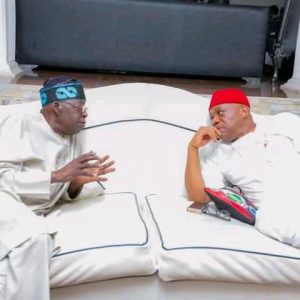
 Tinubu and Kalu: An Analysis of Trust, History, and Shared Purpose
The public relationship between President Bola Ahmed Tinubu and Senator Orji Uzor Kalu is not based on momentary political convenience. It is a relationship built over decades, shaped by shared experiences, tested by political differences, and sustained by mutual respect. When President Tinubu congratulated Senator Kalu on his 65th birthday on April 21, 2025, he did more than send goodwill wishes. He reminded Nigerians of a political bond rooted in history, service, and a common belief in Nigeria’s progress.
Both men belong to what is often called the “Class of ’99” governors — leaders who emerged at a critical moment in Nigeria’s history. In 1999, Nigeria returned to democratic rule after years of military governance. Those elected at that time were not just politicians; they were nation-builders tasked with stabilizing democracy, rebuilding institutions, and restoring public confidence. Tinubu, as Governor of Lagos State, and Kalu, as Governor of Abia State, faced different local challenges, but they shared the same national burden.
This shared origin matters. Leaders who pass through defining historical moments together often develop a deep understanding of each other’s strengths, weaknesses, and values. Tinubu and Kalu worked in different regions and political camps at various times, yet they remained connected by a common commitment to democracy and governance. This long history explains why trust exists between them today.
One major reason Tinubu believes in Kalu is consistency. Over the years, Kalu has remained actively engaged in Nigeria’s political and economic life. From his time as governor to his role in the National Assembly, he has stayed relevant, vocal, and involved. Even when political winds changed, Kalu did not retreat from public life or national discourse. For leaders like Tinubu, consistency is a sign of reliability.
Tinubu’s public praise of Kalu’s patriotism reflects this view. Patriotism, in this context, does not mean perfection or agreement on every issue. It means putting the country above personal grievances and political rivalry. Tinubu acknowledged that they have had political differences, yet their respect for each other endured. This ability to disagree without becoming enemies is rare in Nigerian politics and forms the foundation of genuine trust.
Another important factor is Kalu’s entrepreneurial background. President Tinubu has consistently emphasized the importance of private enterprise, economic productivity, and job creation. Kalu’s establishment of Slok Holding and his investments in banking and media align with this philosophy. These ventures did not only generate personal wealth; they created jobs and contributed to Nigeria’s economic ecosystem.
For Tinubu, who has always advocated for economic reforms driven by private sector participation, Kalu represents a political leader who understands business, risk-taking, and economic growth. This shared belief in enterprise-driven development strengthens their alignment. Tinubu sees in Kalu a partner who understands that governance and economic productivity must work together.
On the other side, Kalu’s belief in Tinubu is equally grounded in experience. Tinubu’s political journey, especially his role in strengthening opposition politics and later building national coalitions, has demonstrated strategic thinking and resilience. Leaders like Kalu respect strength that is earned over time. Tinubu’s rise to the presidency was not accidental; it was the result of decades of planning, alliances, and political endurance.
Kalu has witnessed Tinubu’s evolution from a regional leader to a national figure. That familiarity breeds confidence. Kalu understands Tinubu’s leadership style, his decision-making process, and his long-term vision for Nigeria. This makes cooperation easier because expectations are clear.
Their relationship is also sustained by personal qualities. Tinubu described Kalu as resilient and generous. These traits matter in politics, where setbacks are frequent and alliances are tested. Kalu’s resilience — shown through political comebacks and sustained relevance — signals mental toughness. His generosity, often reflected in philanthropy and political support for others, builds goodwill across political divides.
Trust in politics is often based on predictability. Tinubu and Kalu believe in each other because they know how the other is likely to act under pressure. This predictability does not mean rigidity; it means integrity. Even when they do not agree, they can anticipate each other’s actions and motivations.
The birthday message also highlights something deeper: mutual recognition. Tinubu did not merely acknowledge Kalu’s age; he celebrated his contributions to Nigeria’s “economic and political tapestry.” This phrase suggests that Tinubu sees Kalu as part of the larger national story, not just as an individual politician. Recognition at this level builds loyalty and reinforces belief.
Religion and values also play a subtle role. Tinubu’s prayer for Kalu’s strength, wisdom, and continued service reflects shared cultural and spiritual values common among Nigerian leaders. Such expressions reinforce bonds beyond politics, appealing to shared humanity and responsibility.
Importantly, their belief in each other sends a message to Nigeria. It shows that long-term relationships, built on respect and service, can survive political competition. It suggests that unity among experienced leaders is possible, even in a divided political environment.
Rubby Obinna
December 13, 2025.
